
“Human solidarity is to be achieved not by inquiry but by imagination, the imaginative ability to see strange people as fellow sufferers. Solidarity is not discovered by reflection but created.”
— Richard Rorty, Contingency, Irony, and Solidarity
Yes, we were all a little strange in high school. But some of us didn’t — or couldn’t — cover up our differences. We found solidarity in being fellow sufferers, inhabiting existential anxiety as if it were the only stable constant.
It was fall 1986 at Langley High School. I’d been introduced to Brian Johnston through mutual friend Anu Kirk. We’d seen each other’s bands — both of us played keyboards, so at first we were more competitors than colleagues. But we immediately embraced the irony that we were both ‘geniuses,’ a term loosely thrown around to describe someone’s distinct weirdo-ness.
I invited him to the Purple Room, my basement recording studio and safe-haven, for a jam. His playing was empathic: without ego, but not passive either. His atmospheric melodies pushed the musical conversation to new plateaus. When Brian joined the full-band rehearsals for Wept, he immediately augmented the songs — transporting our cluttered sonics from a small basement to the interior of a twilight-filled cathedral.
And just as the music was sometimes dissonant and fragmented, Brian became the bond that held together the splintering forces within the band, between members and within ourselves. He joked ironically about death — not in a macabre way, but in the way that the concept of death signals a transformation, where we give ourselves permission to fully let go of the past. It helped us put our present strife in perspective. It wasn’t until later that I discovered the wisdom in his wry humor.
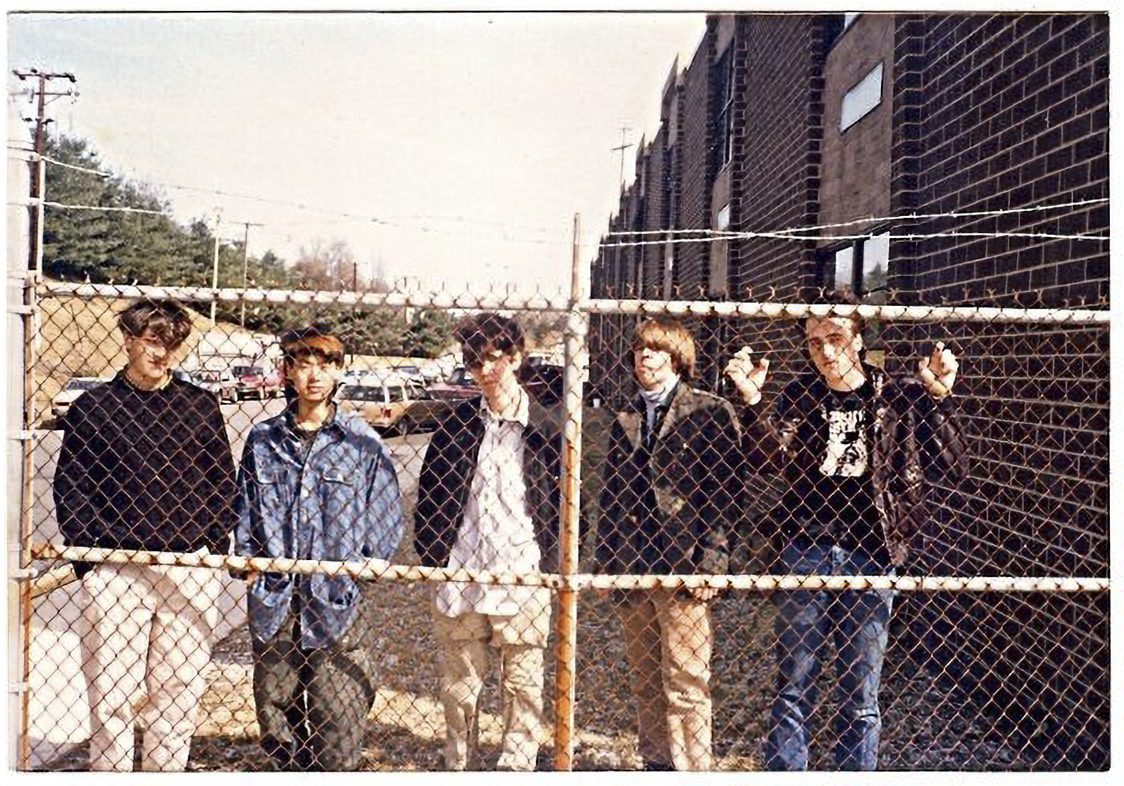
When we graduated, Brian left for BYU in Utah. His cool-headed, ambassador-like presence was missed and the band fell apart.
In the years that followed, Brian and I kept in touch through handwritten letters. He grappled with his faith through words and drawings. In summer 1990, stationed in Germany, we made a pact to meet at the train station at a certain time — no backup plan. If we couldn’t connect, it wasn’t meant to be. Brian was rarely late, but I waited until sundown. Through a methodical search through phone books and the help of a few locals, I located the LDS mission offices late into the night. When the members outside adamantly stated that no visitors were allowed, I raised my voice in frustration — probably sounding like blasphemy. On a second-floor window, I noticed a tall, gaunt figure unmistakably Brian-esque. He didn’t move. Only watched. I hesitated, and moved on.
Years later, when we reconnected through Facebook, Brian confirmed it was likely him in that window. He admitted to judging my behavior then, but that devout version of him was now “dead.” He had become a doubt-leader — featured in the Washington Post for guiding others through the paradoxes of faith, and hosting a series of podcasts on Mormon Stories where voices from the outer edges of the church shed light on the limits of fundamentalist thinking. Even if you’re not Mormon, these conversations are an enlightening way to grapple with what it means to be an outsider to the institutions shaping our society.
In a series of late-night brainstorms about his emerging artistic pursuits, I pitched a final version of his stage name: IReverend Brainskan. Brian messaged back in words reminiscent of our first high school talks:
“I actually think it’s better to see how a genii ‘the other’ interprets my artistic output through their own filters. Yours is probably a better translation than I could attempt on my own. Nice play on words: ‘IReverend.’ [i]nternet/electronic Reverend, but also sounds a little like irreverent. Which is it? I don’t know… Consulting the oracle, Magic 8-Ball says ‘Please Ask Again.’”
He added ‘XIII’ — IReverend Brainskan XIII — because it was the early hours of 19 January 2013, and this was to be his 13th incarnation. Even then he joked about the death of previous states of understanding.
His journey back to music wielded his genius sense of irony to new nuanced levels. But first — watch him spin fire. During some of our last talks, Brian forwarded a series of YouTube videos of his mad skills with flame: playing with mysticism, the occult, and the earthly elements, all within the context of a backyard DIY exercise video. That disco-infused soundtrack. I laughed for weeks.
Non Ex Nihilo 396hz — a composition of sequentially layered octaves from 2013 — is one of my favorites: he peels apart layers of a single note into a beautifully striking minimal soundscape, beauty constructed entirely from rules and imagination. Brian asked me to collaborate. He wrote: “I was trying to leave a lot of room open for you to add stuff or morph the concept into something completely different.” I always assumed there would be time. I deeply regret not making it.
His final release, Shamanic Drum Journey Tools (April 2021), offered meditational beats as a toolkit to “give the traveler time to get into a comfortable position and prepare for entry into non-ordinary reality.” Music for Brian was never about self-expression — it was a contingent medium to build new communities and question existing ones.
Richard Rorty celebrates ironists as having an elevated intelligence: someone with “radical and continuing doubts” because they are constantly engaging with other forms of knowledge. Through his art and his actions, Brian understood others’ vocabularies with profound sensitivity. He listened intently and gently prodded us to think beyond ourselves — and always gave without asking for anything in return.
In the way he always celebrated positive change, I believe Brian has transitioned — not passed away. He asked us to understand death as transformation, and in this way he died on his own terms. Our vivid memories of him will always live on in his genius sense of humor and his understated but limitless sense of empathy.
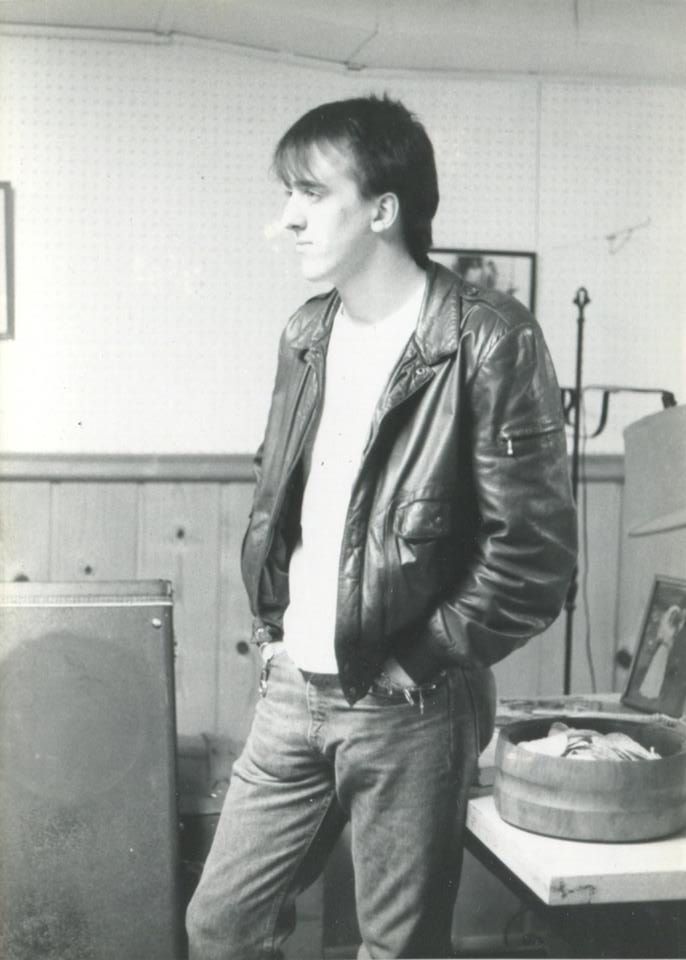
A special thanks to Brian’s wife, Ellen Congram Johnston, and her extended family for their strength in sharing the news. We are all here with you.
…And here’s one last song from 1987, featuring Brian on keyboards. Farewell (for now), my friend.
Related Posts
-

COtu
Three alt-rock collabs — a transpacific love story, a dictator satire, and a Nugent homage.
-
sun*load
Thirty years between high school and this collaboration — four goth/ambient songs and a David Bowie ghost story.
-
Luscious-235
A synthwave collaboration set in the lost decade of the 19A0s — and a rare interview with Luscious-235.
-
Emilio GS
Two alt-pop collaborations with a Madrid composer — memory, erasure, and the light that stays the same.