Wept
Six releases from a DC underground band that summoned post-punk, goth, and avant-jazz out of blue ether and basement tape.
Active: 1987-1991
Members: Xopher Davidson, Wili Vorticiti, James Chandler, Rudenotse, Christopher Wassell, Brian Johnston, Jh0st
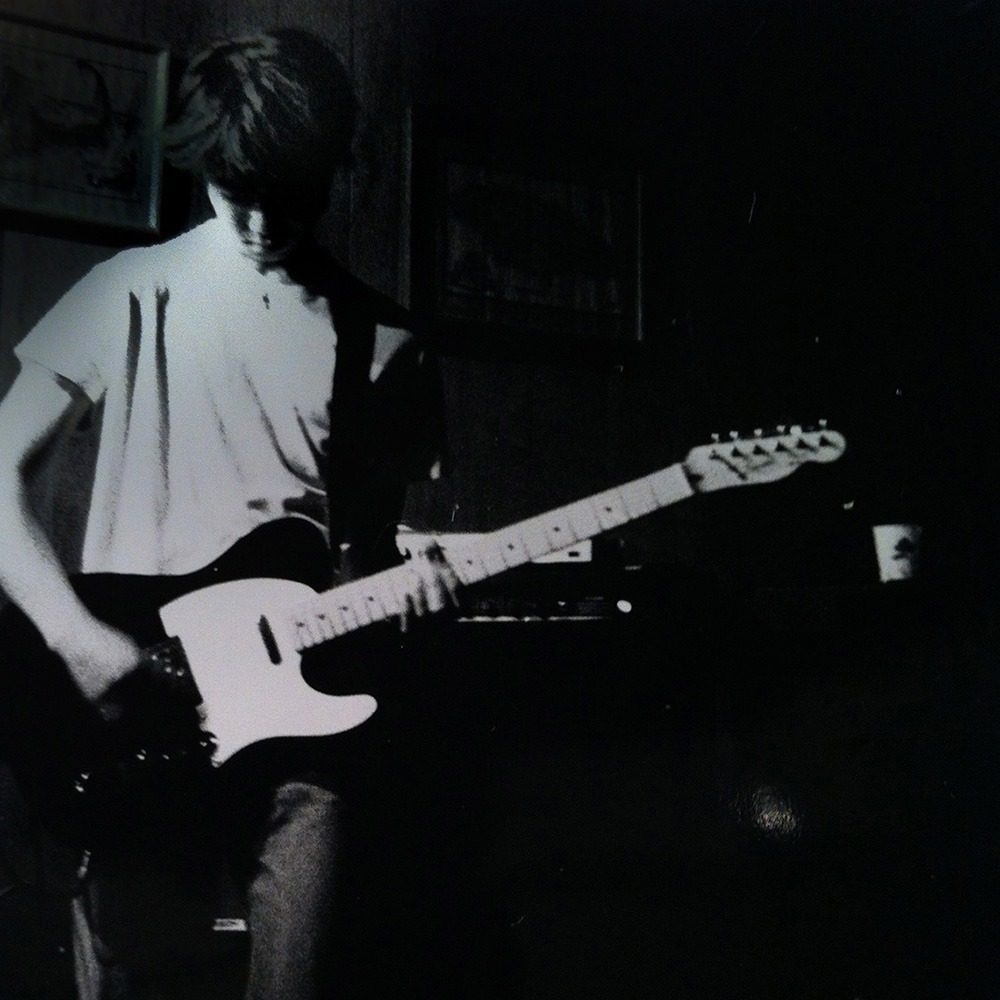
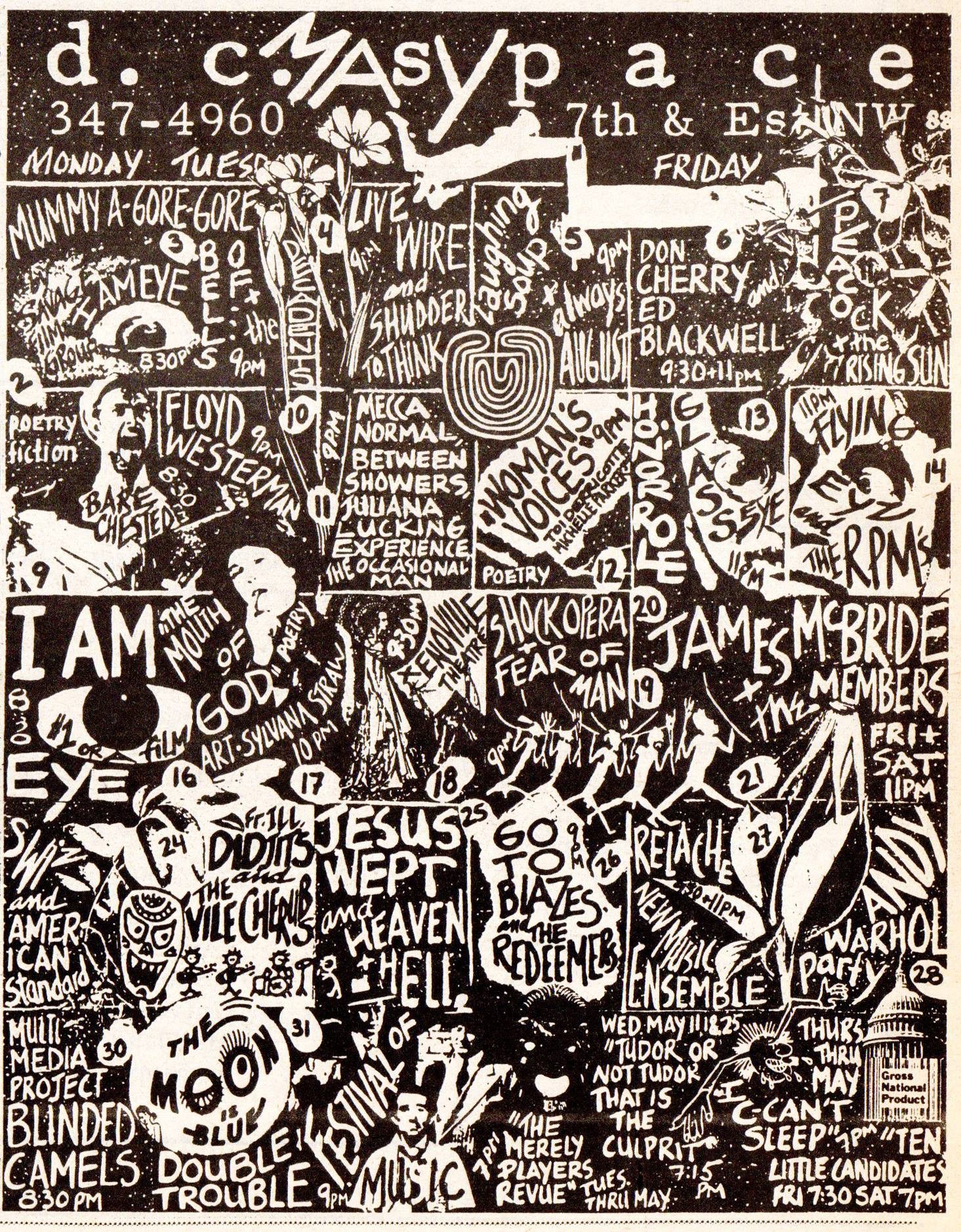
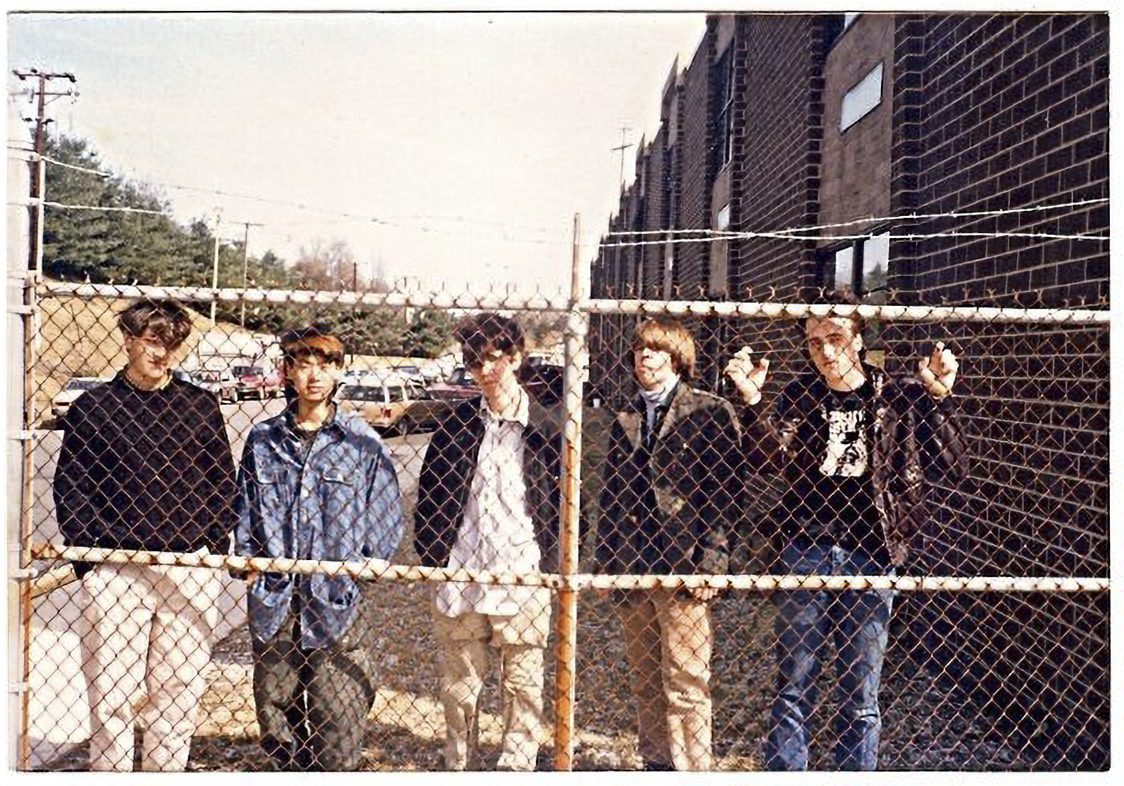
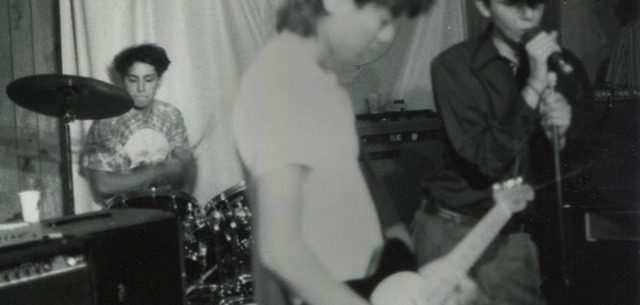
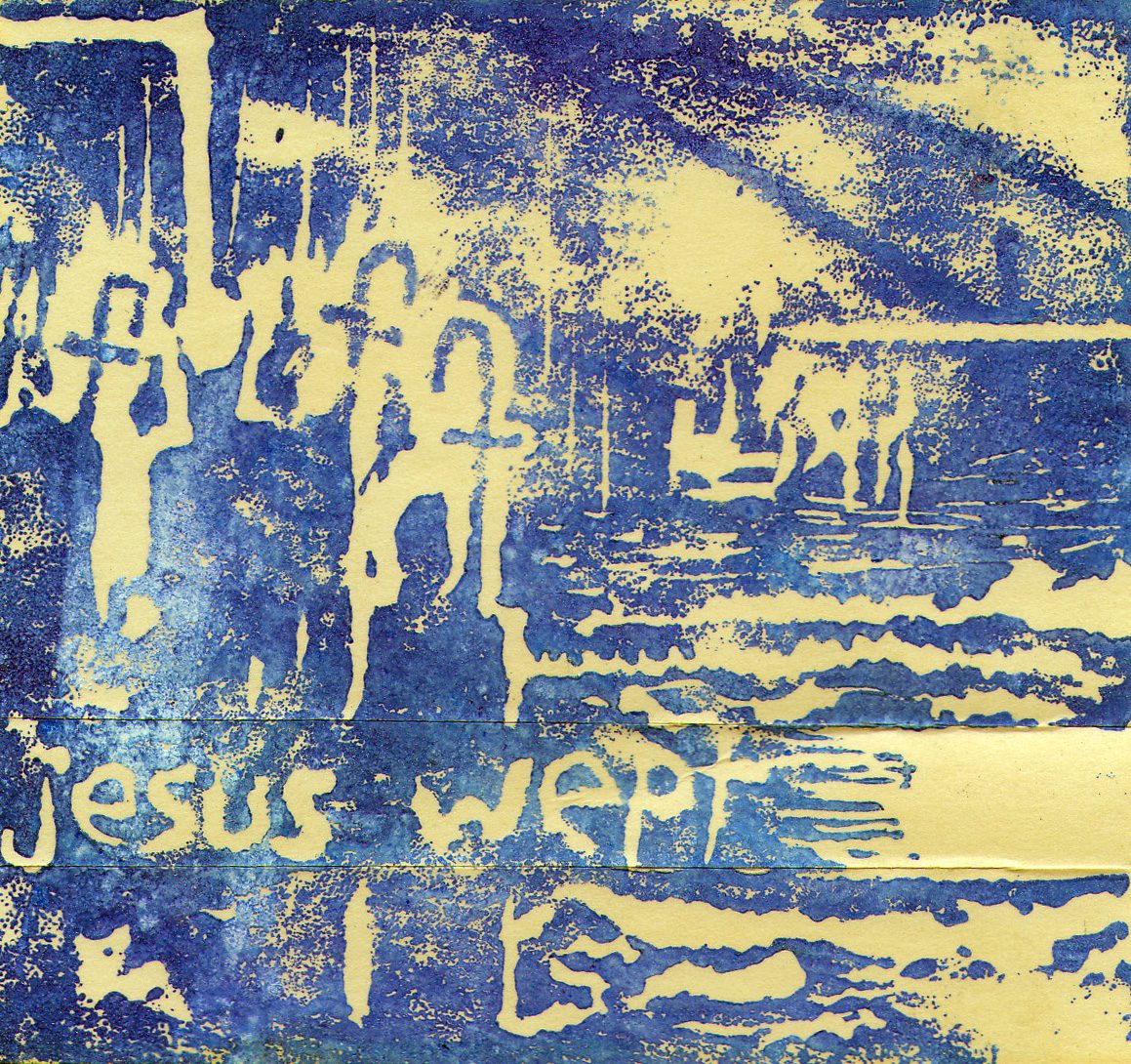
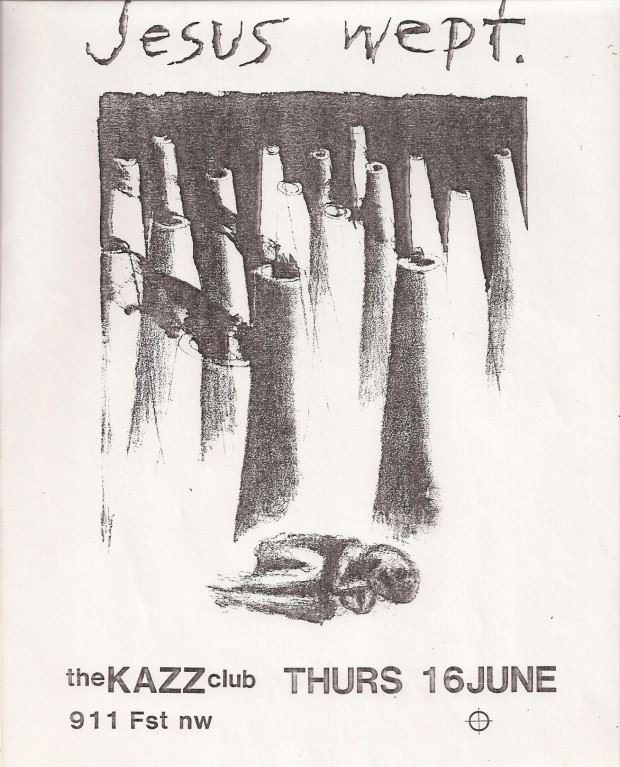
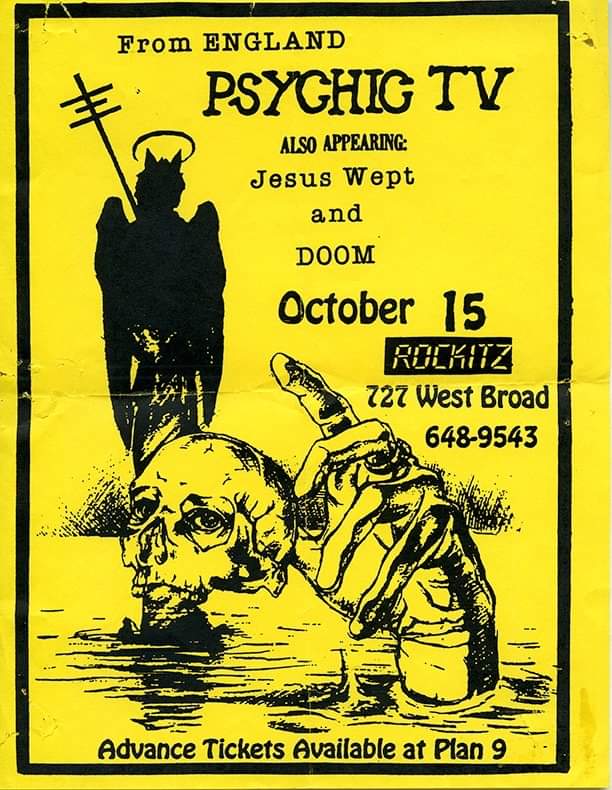
Jesus Wept formed at Langley High School in 1986 from a loose collective its members called the abertrods — a private term meaning somewhere between genius and ineptitude, which turned out to be an accurate description of the band. What followed was five years of dark, genre-resistant music that built a genuine following in the DC underground, opening for Psychic TV and playing regularly at DC Space.
Wept resisted easy classification because the people making it resisted easy classification. The rhythm section played in its own time signatures — sometimes intentionally, sometimes not. Guitar and bass moved between noise and jazz. The lyrics drew from poetry and existential unease rather than rock convention. Across six releases spanning 1986 to 1993, the band evolved from psychedelic post-punk into something harder to name: gothic in atmosphere, improvisational at its core, and darker than most of its contemporaries were willing to go.
Wake I (1986)
The beginning of the abertrod formation — poetry, angst, irony, and psychedelia in loose, amoeba-like configurations. The band hadn’t yet solidified into a rock ensemble, which gave these early recordings a raw, shape-shifting quality that the later albums would trade for power. Fans of 60s garage punk, west coast deathrock, and UK post-punk: this is where it started.
Members
wili vorticiti: bass
xopher davidson: vocals, guitar
james chandler: guitar
jh0st: keyboards, alto saxophone
with guests
darrow han: violin, drum
Rudenotse (Wake II, 1987)
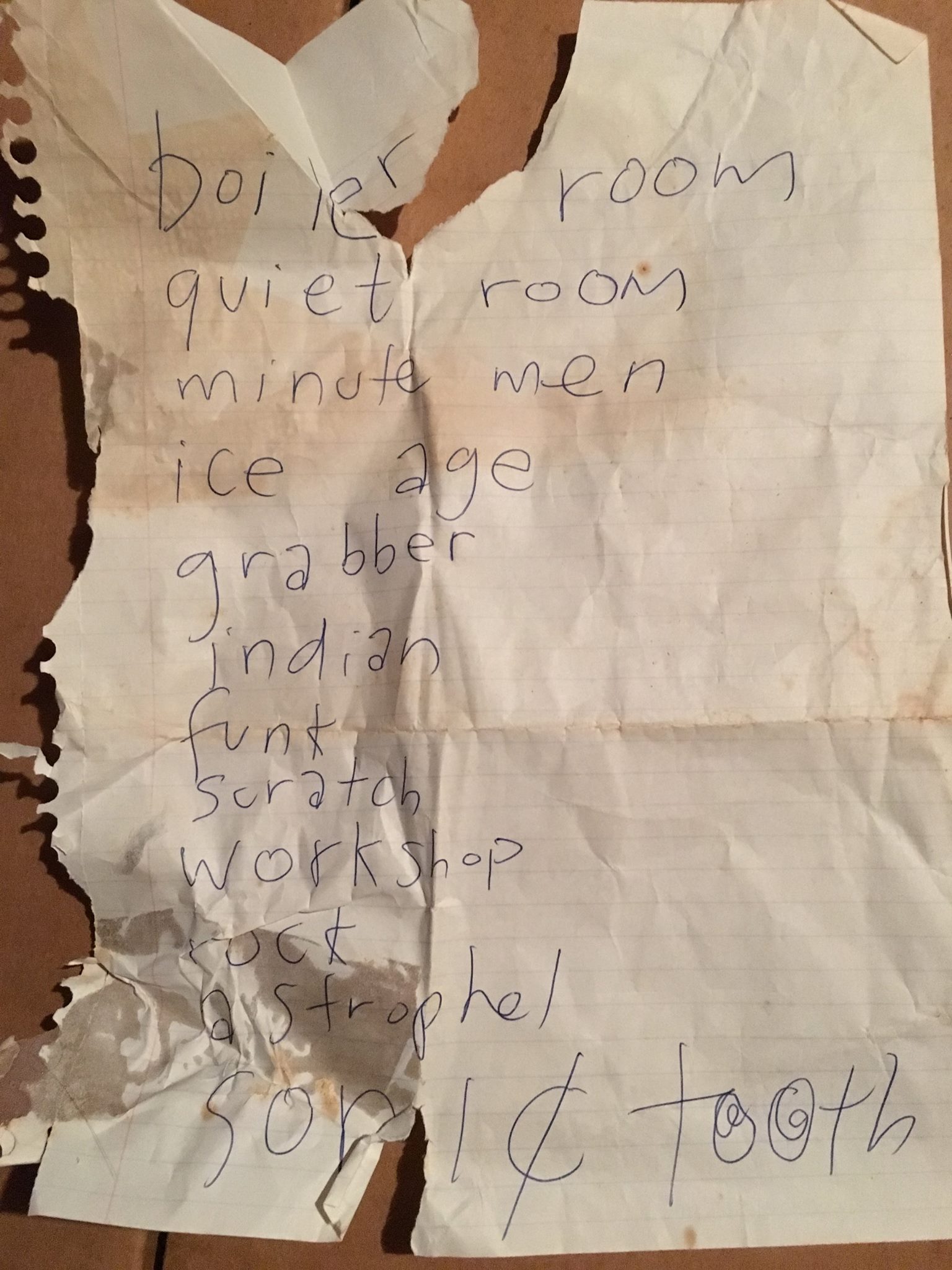
The arrival of Rudenotse on drums pulled Wept into a proper rock ensemble — with one complication: Rudey played every song as if it were in 9/8 when it wasn’t. The result was accidental genius. Tracks like Telekaster landed dark and gothic while staying loose and jazz-like in a way that straight time signatures never would have allowed. Astrophel pushed further toward the ether-angst arriving from UK airwaves, while Fire Escape fused Xopher’s melancholy lyrical abstraction with the piano textures of Resonance — two parallel worlds briefly occupying the same song.
Members
wili vorticiti: bass
xopher davidson: vocals, guitar
rudenotse: drums
jh0st: keyboards, alto saxophone
Star Ball Contribution (Wake III, 1987)
Christopher Wassell took the drum throne on the heels of Rudenotse’s cross-country departure, and his heavier style pushed Wept’s sound into new dimensions. The most accessible of the Wept catalog — Alleysheba is as close to goth-pop as the band would dare — but accessibility was never the whole story. Grabber is the kind of melancholy ballad that earns its darkness honestly, held together by Brian Johnston’s ghostly keyboard work. And buried inside the polished dark wave were heavier rock fantasies like Odom, where the noise potential of six strings became suddenly clear. To the infernal depths, drinking the blue afterglow.
Members
wili vorticiti: bass
xopher davidson: vocals
christopher wassell: drums
brian johnston: keyboards
jh0st: guitar
Exit (Wake IV, 1988)
The best Wept album, and the most uncompromising. Exit came full circle to the avant roots of Wake I while summoning the full sonic power of a rock band — Spectre brings Vorticiti’s fluid bass to the foreground, opening a modal backdrop for Xopher’s stark poetics. Visionary mixes existential narrative with subtle improvisational structures; Wept’s ensemble playing at its height. The posed darkness of earlier records unraveled here into something real.
It cost them. A scathing public dismissal from Fugazi’s Ian MacKaye — who called the music out for its “negative energy” — effectively stamped out whatever momentum the band had built in DC. The irony is that Exit is precisely where Wept stopped performing darkness as style and started meaning it.
Members
wili vorticiti: bass
xopher davidson: vocals
christopher wassell: drums
brian johnston: keyboards
jh0st: guitar, alto saxophone
Sölstice (1988)
Wept had officially disbanded by the end of 1988, but its core members gathered one last time for a winter evening session. The drum machine — modified by Xopher — drove a set of psychedelic dark wave recordings that felt less like a farewell than a quiet experiment freed from the pressure of being a band. Tea Room is an homage to the basement space where all the Wept recordings were made: four tracks, close quarters, the right kind of dark.
Members
wili vorticiti: bass
xopher davidson: vocals, guitar, bass
tr-808: drums
jh0st: guitar, keyboard
93:05 (1993)
Five years after Sölstice, core members reconvened in New York for an impromptu two-song session. The gap showed — in the best way. What had been a band of ambitious teenagers was now a group of weathered musicians who could lay down improvised sonic noise with the ease of jazz veterans. Glass Insulator builds from Vorticiti’s signature bass work into something epic and unhurried. A revisit of Ikon from Exit took the original somewhere it hadn’t been. Two songs. Enough said.
Members
wili vorticiti: bass
xopher davidson: vocals
matthew mcguigan: drums
jh0st: guitar
Related Posts
-

Fading Green
As names fade from stone, forests quietly reclaim the stories we leave behind. → read more
-
Ely Sky
A midnight escape and a secret undertow — one last eye cast toward the Ely Sky. → read more
-
Sweet Blessing
A song sung to someone who can no longer hear it — grief, tenderness, and a broken violin with one string. → read more
-
d’ville
Five song-stories from Charlottesville, thirty years in the making — loss, longing, and flashes of joy. [2022] → read more